
When a homeowner near Cadogan Road in Dosthill planned a new bedroom layout, the existing sockets were going to end up hidden behind fitted wardrobes.
Covering them over would have left the room with fewer usable sockets and probably led to extension leads being run around the furniture afterwards. Instead, I was asked to move the existing sockets, add new ones in more practical positions and install a supply for an external light.
Because the floor was accessible, I could run the cabling under the floor and keep it tucked away. The walls were cut out and made good before the decorating was completed. The finished bedroom had sockets and switches exactly where they were needed, with nothing trapped behind the new wardrobes.
That is the main benefit of installing additional sockets: the electrical installation can be adapted to the way the room is actually used.
Why Older Properties Often Need Extra Sockets
Many houses in Tamworth and the surrounding areas were built when homes used far fewer electrical appliances. A room may only have one or two single sockets because there was once no need to power televisions, broadband routers, computers, phone chargers, lamps and other equipment at the same time.
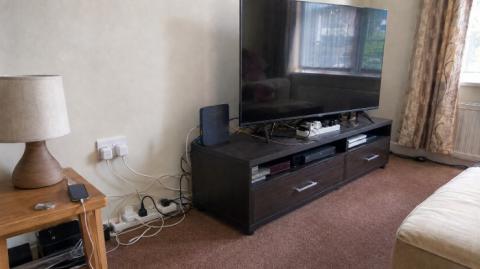
Today, too few sockets often leads to permanent reliance on extension leads and multiway adaptors.
Extension leads are useful temporarily, but they can create trailing cables, clutter and trip hazards. Leads may be trapped behind furniture, stretched across rooms or hidden underneath rugs. Multiway adaptors can also become overloaded when several appliances are connected together.
Installing extra sockets in suitable positions gives you a cleaner and more convenient setup. It also means furniture can be arranged around the room rather than around the only available power point.
What I Check Before Adding a Socket
A new socket cannot always be taken from the nearest existing one.
Before starting, I test the circuit and check how the existing sockets have been wired. Some older circuits do not have the RCD protection now required for new socket work, so additional protection may need to be installed first.
I also check for existing spurs. If a socket is already supplied as an unfused spur, another socket cannot simply be extended from it. This is a common mistake and can result in work that does not comply with BS 7671.
Where the existing circuit tests satisfactorily, I can usually find a safe and practical way to add the required sockets.
What Happens When You Book
I start with a free telephone consultation, followed by a home or business visit so I can inspect the existing installation and discuss where the sockets are needed.
You then receive a clear and simple quotation covering the agreed work and materials. Once accepted, we arrange an installation date and I order any required parts.
Most additional socket installations take around one to two hours and can be completed in a single visit. After installation, I test the work, provide the appropriate certification and walk through the completed job with you.
I normally use Click socket outlets and accessories. They are good-quality fittings from a local supplier and offer a wide choice of styles and finishes.
Additional Socket Prices in Tamworth
Additional socket work typically starts from £175, subject to a free survey and inspection. The quotation includes the agreed labour and materials, so you know what you are paying for before the work starts.
I have seven years’ experience carrying out this type of work, am NVQ Level 3 qualified and NAPIT registered. My work includes a 12-month workmanship guarantee, along with the relevant manufacturer’s parts warranties.
Tamworth Electricians has received more than 90 five-star reviews, and I aim to respond to enquiries within two hours.
For additional sockets in Tamworth, or when searching for an electrician to install extra sockets near me, call Carl on 01827 799 876 to arrange a free survey and quotation.
- Log in to post comments