
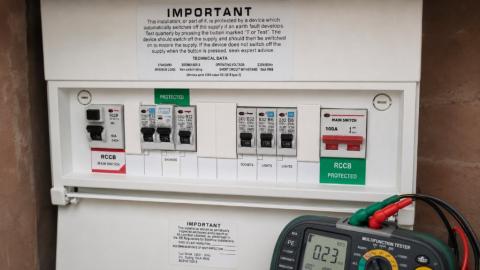
Last month I inspected a lovely house over Clifton Campville, between Tamworth and Atherstone. It was a good example of what I often find in 60s and 70s housing: not one dramatic fault, but a mixture of original wiring, later alterations, worn fittings, and protection that has not kept up with modern use.
During the inspection I found a lack of RCD protection for lighting circuits, no earth/CPC at some lights, an unprotected cable entries to the consumer unit, DIY socket additions, inadequate bonding to utilities, aged fittings, damaged sockets, worn fixtures, fittings and isolators. None of it was unusual for a house of that age, and importantly, the issues were repairable remedial tasks once the Electrical Installation Condition Report (EICR) had identified them properly.
EICR Testing for Older Tamworth Homes
An EICR is not just a quick look to see whether the lights and sockets work. It checks whether the installation is safe for continued use, correctly protected, properly earthed, and suitable for how the property is being used now.
This does not only matter for homeowners, but especially does for landlords, letting agents and businesses who need a Landlords Certificate or Electrical Installation Condition Report for compliance. Older homes can hide electrical gremlins because they have often been altered many times over the years.
Common Problems Found in 60s and 70s Housing
The most common problems I see include older fuse boxes, missing 30 mA RCD protection, lighting circuits with no earth, damaged sockets, loose switches, poor DIY work, inadequate earthing and bonding, and outside electrics that have been slowly chewed through by weather.
An old fuse box is not automatically unsafe just because it is old. Red and black wiring is not automatically dangerous either. The important question is whether the installation tests correctly and whether the protection, earthing and bonding are suitable.
The real fault factory is often later work: extra sockets, outside lights, sheds, garage supplies, showers, kitchens and loft wiring added by different people over the years.
What Happens When You Book
I start with a free consultation visit and quote. Once we have agreed what is needed, we arrange a convenient date for the inspection.
Most EICR visits on this type of property take around 4–8 hours, depending on the size and condition of the installation. After the inspection, I provide the report and, where needed, a clear quote for any remedial work.
In many cases, the troubleshooting and testing can be completed in a single visit. If further repair work is needed, I explain what has been found, what needs attention, and what can be improved later.
How I Test and Inspect
A multi-function tester, or MFT, is essential for this type of work. Used properly, it quickly helps reveal issues with continuity, insulation resistance, RCD operation, polarity and earth fault paths.
Observation is just as important. You can often spot where dubious DIY work has created a problem waiting to happen: odd socket additions, damaged fittings, poor cable entries, bad joints, or accessories that have clearly had a hard life.
Pricing and Peace of Mind
EICR testing for Problems with 60s and 70s houses in Tamworth starts from £400, with the final quote given after a free survey.
I’m NAPIT registered, NVQ Level 3 qualified, and Tamworth Electricians has 90+ five-star reviews. Workmanship is covered by a 12-month guarantee, with manufacturer parts warranties applying where new parts are fitted.
If you are searching for Problems with 60s and 70s houses in Tamworth near me, or you need an EICR for a rental, sale, business premises or older home, call Carl on 01827 799 876.
- Log in to post comments